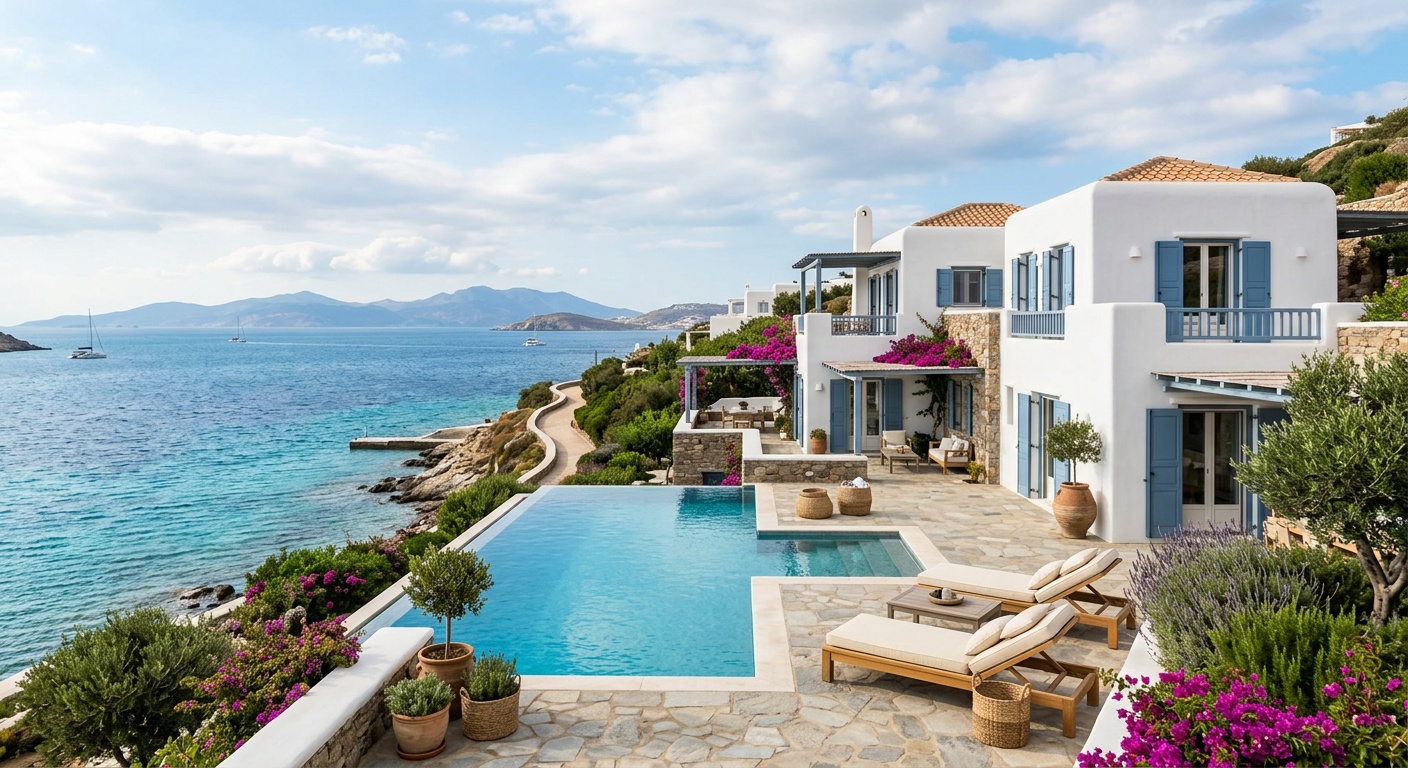
Why Overseas Waterfront Buyers Are Turning to Greek Coastal Markets
Reading time: 9 minutes
Table of Contents
- The Shift Toward Greek Shores
- What’s Driving Demand in 2026
- Case Studies: Real Buyers, Real Decisions
- Comparing Greek Coastal Markets to Rivals
- Challenges Buyers Should Anticipate
- Practical Steps for First-Time Buyers
- FAQs
- Your Roadmap Forward
The Shift Toward Greek Shores
Something interesting has been happening along the Aegean and Ionian coastlines since early 2025. Buyers who once defaulted to Spain, Portugal, or the French Riviera are now quietly redirecting their capital toward Greece. It’s not a fad—it’s a recalibration driven by pricing gaps, lifestyle appeal, and a maturing legal framework that finally feels approachable to foreigners.
For those unfamiliar with the term, a coastal waterfront property refers to real estate positioned directly along a shoreline, offering direct or near-direct access to the sea. In Greece, this includes everything from restored fishermen’s cottages on Crete to modern glass-fronted villas overlooking the Cyclades. The appeal isn’t purely aesthetic; it’s financial, cultural, and increasingly strategic for buyers diversifying assets across borders.
A Market That’s Finally Catching Up
Greece spent the better part of the last decade rebuilding investor confidence after its debt crisis. By 2026, that rebuilding has translated into tangible momentum. According to data compiled by the Bank of Greece, foreign direct investment in real estate reached approximately €3.1 billion in 2025, a figure that continues climbing into 2026 as international buyers seek entry points before prices fully catch up to regional competitors.
What’s Driving Demand in 2026
Well, here’s the straight talk: buyers aren’t choosing Greece out of nostalgia for ancient ruins and blue-domed churches alone. There are concrete, calculable reasons behind the surge.
- Price advantage — Coastal property per square meter in Greece often costs 30-45% less than comparable stretches in Italy or the French Riviera.
- Golden Visa recalibration — Even with adjusted investment thresholds introduced in 2025, Greece remains one of the more accessible residency-by-investment programs in the EU.
- Climate resilience perception — Buyers increasingly favor regions with manageable water access, lower flood exposure, and infrastructure investment in coastal defenses.
- Rental yield potential — Short-term rental demand in island regions like Paros and Naxos has grown steadily, with average gross yields hovering around 5.8% in 2026.
The Psychological Pull of “Undiscovered” Coastlines
There’s also a subtler force at play—buyers want exclusivity without the crowds. Santorini and Mykonos remain iconic, but savvy investors are now eyeing the Peloponnese, Evia, and parts of Epirus, where waterfront parcels still trade at a fraction of headline island prices. It’s the classic pattern: early movers capture value before mainstream attention catches up.
Case Studies: Real Buyers, Real Decisions
Consider Markus, a German logistics entrepreneur who purchased a renovated stone villa near Nafplio in mid-2025. He compared listings across Croatia, Montenegro, and Greece before settling on the Peloponnese. “The paperwork took longer than I expected,” he admitted, “but the value-per-euro was undeniable compared to the Dalmatian coast.”
Then there’s Priya and Daniel, a UK-based couple who bought a two-bedroom seafront apartment on Crete in early 2026. Their motivation was hybrid: partial retirement planning combined with rental income. Within their first eight months, occupancy averaged 71%, generating enough revenue to cover the mortgage and annual property taxes with room to spare.
A third example involves a Singaporean family office that allocated funds toward three separate coastal units in Halkidiki as part of a broader European diversification strategy. Their advisor noted that Greek coastal assets offered “a rare combination of lifestyle utility and defensible long-term appreciation” compared to saturated markets like the Costa del Sol.
Lessons From These Transactions
Each case reflects a different motivation—capital preservation, lifestyle transition, or portfolio diversification—but all three buyers cited the same three factors: price-to-value ratio, improving legal transparency, and the growing ease of researching greece real estate for sale listings through international platforms that now provide English-language documentation and verified ownership records.
Comparing Greek Coastal Markets to Rivals
To put things in perspective, here’s how Greece stacks up against three commonly compared Mediterranean markets in 2026.
| Market | Avg. Price/m² (Coastal) | Gross Rental Yield | Foreign Ownership Ease | Golden Visa Available |
|---|---|---|---|---|
| Greece | €2,900 | 5.8% | High | Yes |
| Spain | €3,600 | 5.1% | High | No (discontinued 2024) |
| Portugal | €4,200 | 4.6% | Moderate | Limited (non-real estate route) |
| Italy | €4,800 | 4.2% | Moderate | No |
| Croatia | €3,300 | 5.0% | Moderate | No |
Visualizing the Price Gap
The chart below illustrates average coastal price-per-square-meter across these five markets, making the comparative affordability of Greece immediately visible.
Challenges Buyers Should Anticipate
No market is frictionless, and Greece has its own quirks worth understanding before signing anything.
Bureaucratic Pacing
Property registration through Greece’s Ktimatologio (land registry) has improved significantly, but rural and island properties sometimes carry incomplete title histories. Buyers should budget for thorough legal due diligence—typically four to six weeks—before finalizing any contract.
Currency and Tax Planning
Non-eurozone buyers face currency exposure, and Greece’s property transfer tax (currently around 3.09%) combined with notary and legal fees can add 8-10% to the purchase price. Smart buyers factor this into their offer calculations from day one rather than treating it as an afterthought.
Seasonal Infrastructure Limitations
Some smaller islands still experience reduced ferry schedules, water pressure issues, or limited high-speed internet outside peak season. As one Athens-based property consultant put it, “Buyers dreaming of island life need to visit in February, not just August, to understand what daily reality looks like.”
Practical Steps for First-Time Buyers
- Engage a local lawyer independent of the seller — Avoid conflicts of interest by hiring your own legal representation.
- Verify zoning and building permits — Coastal setback laws in Greece restrict construction within certain meters of the shoreline; confirm compliance before purchase.
- Open a Greek bank account early — This simplifies tax payments, utility setup, and mortgage processing.
- Budget for the AFM tax number process — Required for any property transaction, typically issued within a few days.
- Plan a multi-season site visit — Experience the property in both high and low season before committing.
FAQs
Is it legal for non-EU citizens to buy waterfront property in Greece?
Yes, though certain border and island regions require additional permits for non-EU buyers due to historical defense-zone regulations. Most popular coastal areas, including Crete, the Peloponnese, and the Cyclades, are straightforward for foreign purchasers.
How does the Greek Golden Visa work in 2026?
Following adjustments in 2025, minimum investment thresholds vary by region, ranging from €250,000 in select areas to €800,000 in high-demand zones like Athens and Mykonos. The program grants residency rights but not automatic citizenship.
What ongoing costs should buyers expect after purchase?
Annual property tax (ENFIA), maintenance fees, and municipal charges typically total 1-1.5% of property value per year. Rental property owners should also budget for management fees if not self-managing.
Your Roadmap Forward
Greece’s coastal real estate story in 2026 isn’t about chasing a trend—it’s about recognizing a market finally aligning price, lifestyle, and legal accessibility in one package. If you’re weighing your next move, consider this practical checklist:
- Shortlist three regions beyond the obvious tourist hotspots.
- Confirm your budget includes the full 8-10% transaction cost buffer.
- Visit during both peak and off-peak seasons before deciding.
- Secure independent legal counsel before any deposit changes hands.
- Reassess your residency goals against current Golden Visa thresholds.
As global buyers continue rebalancing away from saturated Western Mediterranean markets, Greece’s coastline stands as one of the more compelling arguments for patient, well-researched investment. The question isn’t whether Greek waterfront property deserves a place on your radar—it’s whether you’re ready to act before the rest of the market catches on.