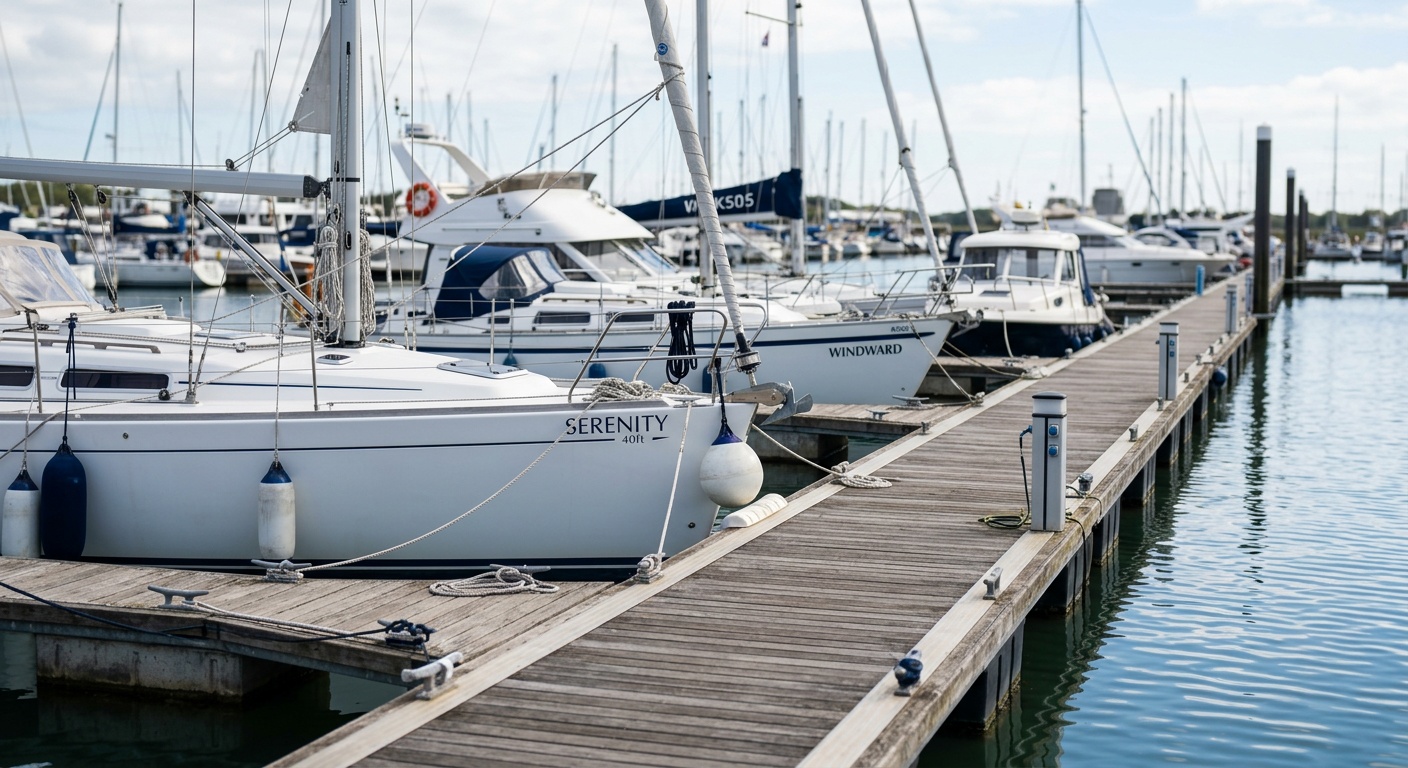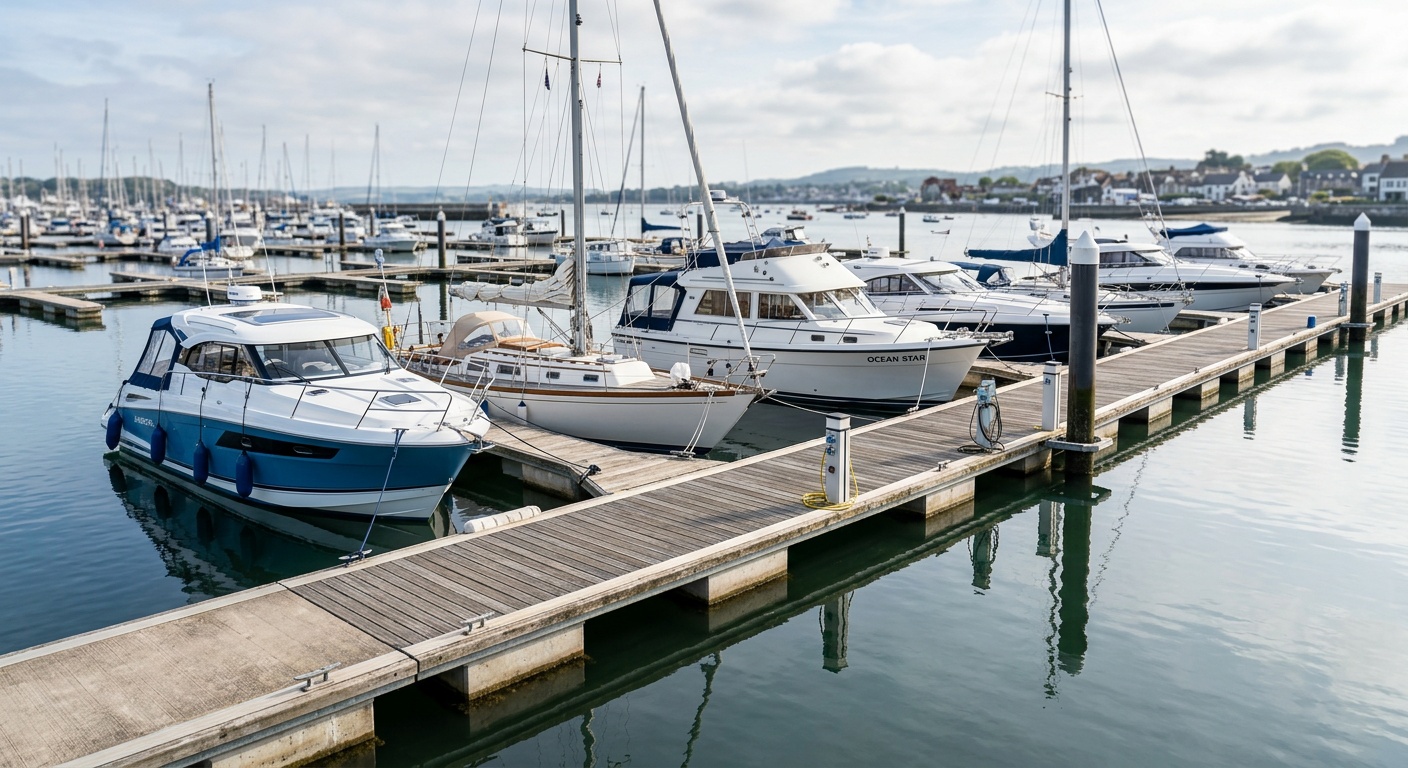
Beyond Zillow: Why Marina Properties Need Specialized Valuations
Reading time: 9 minutes
Table of Contents
- Why Automated Estimates Fail Waterfront Buyers
- The Hidden Variables That Move the Price Needle
- Case Studies: When a Zestimate Missed the Mark
- How Professional Marina Appraisals Work
- Comparing Valuation Methods
- Practical Tips for Buyers and Sellers
- FAQs
- Your Roadmap Forward
Why Automated Estimates Fail Waterfront Buyers
Ever plugged a marina-front address into Zillow and felt like the number just didn’t add up? You’re not imagining it. In 2026, automated valuation models (AVMs) like Zestimate still rely primarily on comparable sales, square footage, and neighborhood averages—metrics that work reasonably well for a suburban colonial but fall apart the moment you add a private dock, a deeded slip, or riparian water rights into the equation.
Here’s the straight talk: algorithms are pattern-matching machines. They need dozens of similar recent sales to generate confidence. Marina and waterfront properties are inherently scarce and heterogeneous—two homes on the same canal can differ wildly in value based on water depth, bridge clearance, or whether the seawall was replaced last year. According to a 2026 analysis by the National Association of Realtors’ waterfront property division, homes with private docks or marina access show median AVM error rates of **18-27%**, compared to just 6-9% for standard single-family homes in the same metro areas.
That gap isn’t a rounding error. On a $1.2 million marina estate, a 20% miss translates to roughly $240,000—enough to blow up a mortgage approval, a refinance, or an estate settlement.
What Makes Marina Real Estate So Different
Unlike a typical residential parcel, marina-adjacent property often bundles several distinct value components into one listing:
- Land value — the structure and lot, valued similarly to standard comps
- Water access rights — riparian or littoral rights that vary by state and even by county
- Dock and slip infrastructure — private docks, boat lifts, or deeded marina slips
- Navigability and depth — a property with 6 feet of draft at low tide serves a very different boater than one with 3 feet
- Regulatory overlays — flood zones, coastal setback rules, and environmental permits (seawalls, dredging rights)
None of these show up cleanly in an MLS data field, which is exactly why algorithms struggle.
The Hidden Variables That Move the Price Needle
Quick scenario: imagine two nearly identical 2,800-square-foot homes on the same Florida canal, three lots apart. One has a wooden dock built in 2009 with no permit renewal; the other has a 2024 aluminum dock rated for a 40-foot vessel with a current environmental permit on file. On paper, an AVM sees “waterfront home, similar size, same zip code.” In reality, appraisers who specialize in marine property will tell you the permitted, modern dock can add **$80,000 to $150,000** depending on the market—sometimes more in high-demand boating communities like Fort Lauderdale or Sarasota.
“Buyers assume the dock is just a bonus feature, but in true marina markets, the dock and water access often carry more weight than an extra bedroom,” notes Maria Fenwick, a certified waterfront appraiser with two decades of coastal Florida experience. That single sentence captures the core problem: generic platforms treat water access as a checkbox amenity, not a distinct asset class with its own depreciation schedule, permitting status, and replacement cost.
Environmental and Regulatory Layers
Marina properties also carry regulatory baggage that generic tools rarely model:
- FEMA flood zone reclassifications, which have shifted for roughly 15% of U.S. coastal parcels since 2023 remapping updates
- State-specific riparian rights law—Texas, Florida, and Washington each handle submerged land ownership differently
- HOA or marina association slip-transfer restrictions that can limit resale value independent of the home itself
- Seawall and bulkhead condition, which insurers increasingly scrutinize before issuing coverage
Miss any one of these, and a valuation can be off by tens of thousands of dollars—or worse, a deal can collapse during underwriting when a lender’s own appraisal contradicts the online estimate.
Case Studies: When a Zestimate Missed the Mark
Case 1 — The Overvalued Slip. A buyer in Annapolis, Maryland relied on an online estimate showing $875,000 for a waterfront townhome with a deeded slip. A specialized marina appraisal came back at $735,000 after discovering the slip’s water depth couldn’t accommodate boats over 28 feet—a major limitation in a marina known for larger sailboats. The buyer renegotiated and saved roughly $140,000.
Case 2 — The Undervalued Estate. In coastal North Carolina, a seller nearly listed a canal-front estate at the Zestimate price of $1.1 million. A licensed marine appraiser identified a rare deep-water channel with direct Intracoastal access and no bridge restrictions—an increasingly scarce feature as more waterways add height-restricted bridges. The property ultimately sold for $1.42 million, a 29% premium the algorithm never saw coming.
Case 3 — The Permit Problem. A Pacific Northwest marina condo appeared identically priced to its neighbor online. A specialized review revealed the neighbor’s dock permit had lapsed and required a costly renewal process, effectively reducing usable dock rights until resolved. That single detail shifted comparative value by nearly $60,000.
How Professional Marina Appraisals Work
Specialized appraisers use a hybrid approach that blends traditional comps with marine-specific due diligence:
- Sales comparison with marine adjustments — comps are pulled from true waterfront transactions, then adjusted for dock size, depth, and permit status
- Cost approach for infrastructure — dock, seawall, and lift replacement costs are calculated separately from the home structure
- Income approach for rentable slips — if the property includes rentable marina slips, projected rental income factors into value
- Regulatory and environmental review — flood maps, permits, and riparian rights are verified with local authorities
This is significantly more labor-intensive than a desktop AVM, which is exactly why it costs more—but also why it holds up under lender scrutiny, insurance underwriting, and estate or divorce proceedings.
Cost vs. Confidence: Is It Worth the Investment?
A specialized marina appraisal typically runs $800 to $2,500, compared to a free Zestimate or a standard appraisal around $500-$700. But given the six-figure swings shown in the case studies above, that investment often pays for itself many times over during negotiation.
Comparing Valuation Methods
| Valuation Method | Typical Cost | Accounts for Dock/Water Rights? | Average Error Range | Best Use Case |
|---|---|---|---|---|
| Online AVM (Zestimate-type) | Free | No | 18-27% | Rough initial screening only |
| Standard Residential Appraisal | $500-$700 | Partially | 10-15% | Standard mortgage refinance |
| Specialized Marina Appraisal | $800-$2,500 | Yes, fully | 3-6% | Purchase, sale, estate, litigation |
| Broker Price Opinion (BPO) | $150-$400 | Minimal | 12-20% | Quick listing price guidance |
Visualizing the Accuracy Gap
Practical Tips for Buyers and Sellers
Ready to turn potential valuation surprises into strategic advantages? Here’s a practical roadmap:
- Request permit history for docks, seawalls, and lifts before making an offer—don’t assume they’re transferable or current
- Verify water depth at low tide, not just at high tide, since this determines which vessels can actually use the slip
- Check flood zone status directly with FEMA’s updated 2026 maps rather than relying on the listing’s stated zone
- Hire an appraiser with marine-specific credentials, such as those certified through the Appraisal Institute’s waterfront property specialization
- Get a title search focused on riparian rights, since submerged land ownership can be separate from the home’s deed in several coastal states
Pro tip: the right preparation isn’t about avoiding a lower number—it’s about entering negotiations with data that actually holds up when a lender’s underwriter starts asking questions.
FAQs
Why is my Zestimate so different from what appraisers say about my marina property?
Zestimate-style tools rely on broad comparable sales data and rarely account for dock condition, permit status, water depth, or riparian rights. These factors can shift value by tens of thousands of dollars, which is why specialized appraisals consistently show tighter accuracy for waterfront and marina properties.
How much more should I expect to pay for a specialized marina appraisal?
Expect to pay roughly $800 to $2,500, compared to $500-$700 for a standard residential appraisal. Given the six-figure valuation swings documented in real transactions, most buyers and sellers find the added cost worthwhile, especially for high-value coastal properties.
Do I need a marina appraisal if I’m just refinancing, not buying or selling?
It depends on your lender, but many lenders now request marine-specific reviews for waterfront collateral because standard appraisals can undervalue or overvalue dock infrastructure. If your property includes a deeded slip or private dock, it’s worth asking your lender whether a specialized review is required or recommended.
Your Roadmap Forward
Marina and waterfront real estate isn’t just another housing segment—it’s a hybrid asset class where land, water rights, and infrastructure intersect in ways generic algorithms simply can’t parse yet, even with 2026’s improved AI-driven AVMs. As coastal demand keeps climbing and flood zone maps keep shifting, the accuracy gap between automated tools and specialized appraisals is likely to widen, not shrink.
Here’s your next move: before you list, buy, refinance, or settle an estate involving marina property, treat the online estimate as a conversation starter, not a conclusion. Pull permit records, verify water depth, and bring in an appraiser who actually understands riparian law in your state. Your dock isn’t just a feature—it’s often the single biggest swing factor in your property’s true worth. So the real question is: are you ready to value your waterfront property the way the market actually will?